
Land grading on Long Island
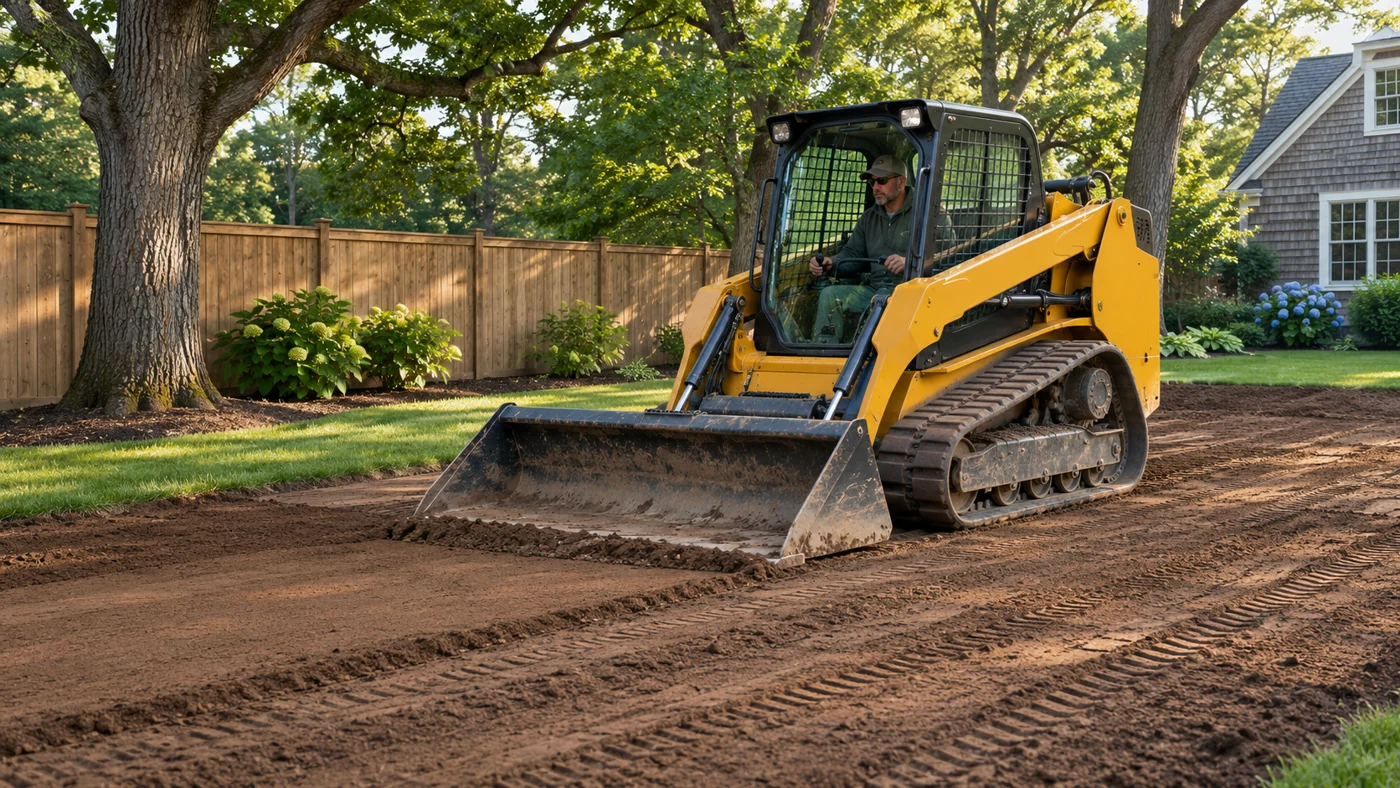
Reshape uneven ground and plan the finished levels around lawns and hardscapes.
Service illustration
What the estimate can cover
A grading estimate should connect the low spots you see with the ground levels you want to keep. Show Hernandez where water collects, which doorways and paths need to meet the new surface and what you plan to install afterward.
- Rough and finish grading scope
- Lawn and outdoor project preparation
- Transitions at patios, paths and fences
Before the visit
Photographs taken after rainfall help illustrate pooling. Bring a landscape plan if one exists and point out utility covers, drains, trees and planting beds you want retained.
Frequently asked questions
Can an estimate cover a low spot that holds water?
Yes. Show where water appears and where it currently goes. The crew can assess whether reshaping the surface will address the issue or whether additional drainage review is needed.
Can grading be coordinated with clearing?
Describe the finished use when requesting both. Clearing removes vegetation and debris, while grading shapes the ground for the next phase.
Will the estimate include topsoil or lawn restoration?
Request those items explicitly. Ask which material, spreading, seeding or sod work is included in the proposed finish.
Plan the next step
What happens to the yard after stump grinding?
Plan for the chips, soil and future use of the spot before the grinder arrives.
Measure for a paver patio you will actually use
Plan a dining table, walking routes and door swings before settling on a patio size.
Questions to ask before replacing a retaining wall
Bring the full slope, the space above it and the path of water into the estimate.
Before you decide
Plan the visit with the crew
Bring your measurements, material choices and access notes to the estimate.